Love My Mom: A Designer’s Embroidery Review
When evaluating digital assets for a craft business or personal studio, the transition from screen to stitch is where the real test begins. As a designer who regularly reviews graphics for production viability, I approached the "Love My Mom" collection with a critical eye toward its utility in actual machine embroidery design workflows. While the product description highlights its versatility as a graphic asset containing EPS, SVG, PNG, and DXF files suitable for scrapbooking and vinyl, my primary focus was assessing how this artwork translates into a tangible embroidery project. For Etsy sellers and makers preparing for Mother’s Day rushes, understanding the structural integrity of this design is essential before committing it to fabric.
Visual Personality and Emotional Resonance
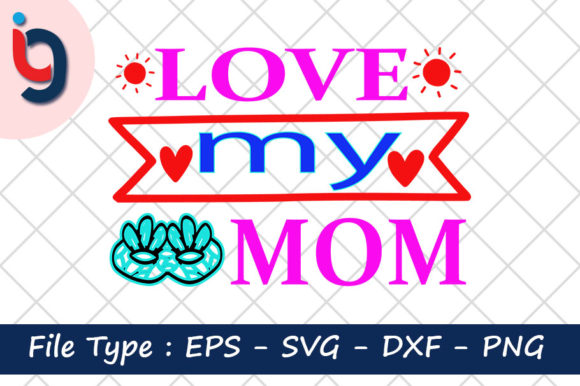
The first impression of "Love My Mom" is one of accessible warmth. In the realm of Crafts and Graphics, typography-driven designs often risk feeling sterile or overly corporate, but this layout maintains a handcrafted softness that appeals directly to the sentimentality of the holiday. The letterforms appear balanced enough to serve as a standalone focal point without requiring excessive embellishment. For a handmade product, this visual personality is crucial; it signals care rather than mass production. When I look at this design, I immediately visualize it centered on a natural linen tote bag or embroidered in soft rose thread on a cream sweatshirt. It possesses the kind of timeless aesthetic that allows for high perceived value in custom apparel and personalized gift markets.
Real-World Application: The Canvas Tote Test
To truly judge this asset, I mentally placed it in a specific production scenario: creating a premium canvas tote bag design for a boutique client. Tote bags are a staple for small shop product lines because they offer a flat, stable surface ideal for testing new digital embroidery file conversions. In this context, "Love My Mom" needs to hold its own against the texture of heavy cotton canvas.
If converting this graphic into an applique design, the clean lines suggested by the vector formats would allow for precise placement stitches. However, if executing this as a full stitch-out using satin stitch borders and fill stitch interiors, the legibility becomes the priority. On a textured canvas, fine details can get lost. I found that this design likely performs best when scaled to at least a 4x4 inch area to maintain clarity. For commercial embroidery purposes, this size ensures the text remains readable from a conversational distance, which is vital for walking advertisements like tote bags. The emotional connection here is immediate; a customer sees the phrase and instantly associates the product with their own maternal relationships, driving engagement and sales.
Navigating Fabric Variables and Technical Constraints
While the design shows promise, experienced makers know that not all substrates are created equal. When planning a sweatshirt embroidery run, the stretch factor of fleece or French terry introduces variables that pure vector graphics cannot predict. "Love My Mom" appears to have open spaces that could be vulnerable to puckering on stretchy knits if the stitch density isn't managed correctly during digitization. I would strongly advise using a cut-away stabilizer rather than tear-away for any knit applications to prevent distortion over time.
Conversely, for baby embroidery items like onesies or bibs, safety and comfort take precedence. If adapting this design for infant wear, you must ensure there are no sharp edges or overly dense stitch areas that could irritate sensitive skin. The provided PNG and SVG files are excellent for creating printable mockup previews to show clients how the design will look on baby garments before stitching, but the physical execution requires careful hooping. Small hoop size limitations might force you to resize the design, potentially compromising the stroke width of the lettering. Always verify the minimum safe size before stitching on delicate fabrics.
Dark fabrics present another challenge. If stitching "Love My Mom" on navy or black material, contrast is non-negotiable. A white or metallic thread provides necessary pop, but you must also consider underlay. Without proper underlay stitches, the dark fabric grain can bleed through lighter threads, making the design look muddy. This is particularly relevant for holiday embroidery projects where rich, dark backgrounds are common.
Professional Presentation and Business Value
For the creative entrepreneur, consistency builds trust. Using a cohesive design like "Love My Mom" across multiple product categories—from embroidered patch production to vinyl decals—creates a recognizable brand identity for your Mother’s Day collection. The inclusion of DXF and EPS files suggests these vectors are clean, which is beneficial if you plan to offer hybrid products, such as matching iron-on vinyl shirts alongside embroidered goods. This versatility maximizes the ROI of your design assets.
However, professionalism also means knowing when *not* to use a design. Avoid placing this detailed typography on highly curved surfaces like structured caps unless you have confirmed the digitizing accounts for the curve. Distorted text on a hat looks amateurish and diminishes the value of your finished product. Similarly, be cautious with sheer or loosely woven fabrics where the tension of the embroidery could pull the material apart. In these cases, the design might be better suited for a printable card insert or a vinyl decal application using the included cut files.
Essential Pre-Production Checklist for Makers
Before listing any item featuring "Love My Mom" in your shop or gifting it to a client, run through this practical validation process:
- Verify File Compatibility: The ZIP contains vector and raster graphics (EPS, SVG, PNG, DXF). Confirm whether you are using these as direct embroidery files or as source art for digitizing. Do not assume a vector file is stitch-ready without checking your machine software.
- Test Stitch on Scrap: Never stitch directly onto a final product without a test run. Use a scrap of the exact fabric and stabilizer combination you intend to use to check for registration issues or puckering.
- Check Licensing: Review the specific terms included in the download. Ensure you have the right to sell finished custom apparel or if the license restricts usage to personal projects only.
- Evaluate Thread Contrast: View the design in black and white mode in your software or mockup tool. If the design relies solely on color to define shapes, it may fail in monochromatic embroidery.
- Assess Washability: For items like kitchen towels or aprons that face frequent laundering, ensure the stitch density is sufficient to withstand wear without fraying.
- Mockup Realism: Use the high-resolution PNG to create realistic printable mockup images for your listings, but clearly label them as digital representations if the photo isn't of the actual stitched item.
Final Thoughts on Design Viability
"Love My Mom" offers a strong foundation for Mother’s Day merchandise, provided it is treated with technical respect. Its strength lies in its emotional clarity and vector versatility, making it a valuable asset for both digital crafters and textile artists. By approaching this design with a maker’s mindset—testing, stabilizing, and validating—you transform a simple digital file into a professional-grade handmade product that honors the occasion and satisfies the customer. Whether you are producing commercial embroidery runs or a single cherished gift, the success of the project depends less on the file format and more on your thoughtful application of embroidery fundamentals.