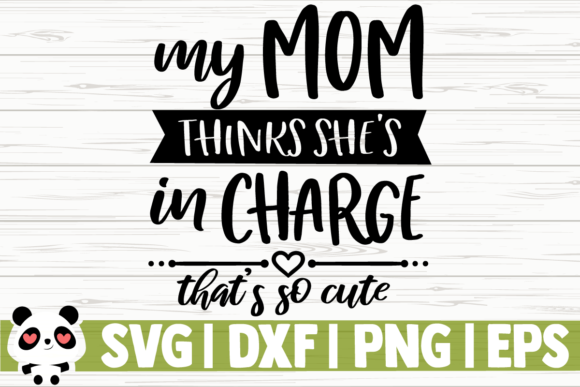
My Mom Thinks She's in Charge: Design Review
As a professional embroidery digitizer and product reviewer, I approach every new graphic with a critical eye toward stitchability. When evaluating My Mom Thinks She s in Charge That s so, my immediate focus is not just on the humor of the phrase, but on how the typography and layout will translate from a digital screen to physical thread. This design falls squarely into the Graphics category within Crafts, but for those of us running a craft business or managing an Etsy shop, it represents a potential bestseller for Mother’s Day, baby showers, and family reunion merchandise. The download includes 1 SVG file, 1 EPS file, 1 PNG file, and 1 DXF file, providing versatility for both print and cut applications, but today we are analyzing its viability specifically as a machine embroidery design.
First Impressions and Visual Personality
The mood of My Mom Thinks She s in Charge That s so is undeniably playful yet assertive. It strikes that perfect balance required for modern mom-centric apparel; it is sassy without being offensive, making it highly marketable. Visually, the layout suggests a bold typographic hierarchy. For an embroidery project, this usually means the designer has prioritized legibility over ornate flourishes, which is exactly what we want to see. In my experience reviewing similar assets, designs with this specific phrasing often utilize a mix of serif and script fonts to create visual interest. However, before loading this digital embroidery file into your software, you must assess the negative space between letters. If the kerning is too tight, satin stitches can merge during production, creating a muddy appearance on the finished product. The personality here is confident, suggesting it belongs on items that are meant to be seen and read quickly, like a tote bag design or sweatshirt embroidery.
Real-World Application: The Custom Sweatshirt Test
To truly understand the value of this asset, I mentally placed it in a real-life production scenario: preparing a custom embroidered sweatshirt for a boutique client who wanted matching "Mom Squad" gear. Fleece and French terry fabrics present unique challenges due to their texture and stretch. When applying My Mom Thinks She s in Charge That s so to this type of substrate, the stabilizer choice becomes paramount. I would recommend a medium-weight cutaway stabilizer to prevent the fabric from distorting under the tension of the stitches.
In this scenario, the design serves as the focal point of the garment. Because the phrase is text-heavy, clarity is king. If I were stitching this out, I would verify that the smallest text elements remain above 4mm in height to ensure they do not get lost in the fleece nap. This design has strong potential for commercial embroidery because the sentiment resonates with a wide demographic. Customers looking for personalized gifts often gravitate toward phrases that validate their role while adding a touch of humor. Seeing this stitched out on a heather grey sweatshirt with white or navy thread creates a high-contrast, professional look that photographs beautifully for printable mockups and social media marketing.
Navigating Fabric Limitations and Hoop Constraints
While My Mom Thinks She s in Charge That s so is versatile, it requires careful consideration regarding where it should not be used. As an experienced designer, I advise caution when attempting this design on highly textured fabrics like terry cloth towels or pique knits unless you use a water-soluble topping. Without that topping, the fine details of the lettering can sink into the fabric loops, rendering the joke illegible. Similarly, if you are considering this for baby embroidery on delicate onesies, you must check the stitch density. Heavy fill stitches on lightweight cotton can cause puckering or even tear the fabric.
Hoop size is another critical factor. This phrase likely requires a wider field of view. If you attempt to shrink this design down to fit a 4x4 hoop, the lettering may become too small to stitch cleanly. Always confirm the native dimensions of the embroidery file before purchasing or stitching. For curved surfaces like caps, flat typography often distorts. Unless the design has been specifically digitized with a curve compensation for hats, I would reserve My Mom Thinks She s in Charge That s so for flat goods like aprons, pillow covers, and tote bags. On dark fabrics, ensure the design includes adequate underlay or is digitized to accommodate a color change for contrast; otherwise, dark thread on dark fabric will fail to communicate the message effectively.
Impact on Product Value and Brand Consistency
Using high-quality graphics like My Mom Thinks She s in Charge That s so directly influences customer trust and perceived value. In the handmade product market, buyers can instantly distinguish between a professionally executed embroidery project and one that looks amateurish. Clean edges, appropriate stitch density, and proper stabilization signal to the buyer that you care about quality. When this design is executed well, it elevates the item from a simple novelty to a cherished keepsake or a staple wardrobe piece.
For Etsy sellers and small shop owners, consistency is key to brand recognition. If your shop focuses on witty, relatable family content, this design aligns perfectly with that niche. It pairs exceptionally well with other complementary graphics to create bundle listings or coordinated collections. Furthermore, because the download includes vector formats (SVG, EPS, DXF), you can maintain brand consistency across different mediums. You might use the PNG for a digital preview or sticker, and the digitized version for the physical embroidered patch or apparel. This cross-platform utility maximizes the return on investment for creative entrepreneurs.
Essential Designer Notes for Success
Before you commit this design to a final product, adhere to these practical guidelines to ensure professional results:
- Test Stitch First: Never run My Mom Thinks She s in Charge That s so directly onto a sellable item without a test run on scrap fabric of the same weight and texture. Check for registration issues or thread breaks.
- Verify Licensing: While the file types are listed, always double-check the specific commercial license terms included with the download. Confirm whether you are permitted to sell finished products, digital files, or both.
- Thread Color Contrast: Test the design in black and white mockups to ensure the hierarchy reads correctly. High contrast between the text and the garment background is essential for readability in photos and in person.
- Inspect Small Details: Zoom in on the embroidery file in your software. Look for tiny jump stitches or overlapping satin stitches that could cause production headaches. Edit these areas if necessary before stitching.
- Stabilizer Matching: Match your stabilizer to the fabric, not just the design. Stretchy fabrics need cutaway; woven fabrics can often use tearaway. Proper support prevents the "bulletproof" stiff feeling that ruins drape.
- Mockup Accuracy: When creating listing photos, use realistic textures. A flat digital image does not convey the tactile quality of embroidery. Showcasing the actual stitch texture builds buyer confidence.
Final Thoughts for Makers and Sellers
My Mom Thinks She s in Charge That s so is more than just a funny saying; it is a functional design asset with significant commercial potential when handled correctly. Its success lies in the intersection of relatable content and technical execution. Whether you are creating holiday embroidery for a craft fair, stocking your online boutique with custom apparel, or making a personalized gift for a friend, the principles remain the same: respect the fabric, honor the stitch limits, and prioritize legibility. By approaching this graphic with the mindset of a professional embroiderer rather than just a consumer, you ensure that every finished product reflects the quality and care that defines the handmade community. Always remember to verify the specific technical specifications of your embroidery file against your machine's capabilities and your project's requirements to achieve the best possible outcome.